Stefanie Carapezza's "Stagefright" is polished immersion into an inflection point
Hope, a hard way, in JC resident's 2025 debut EP
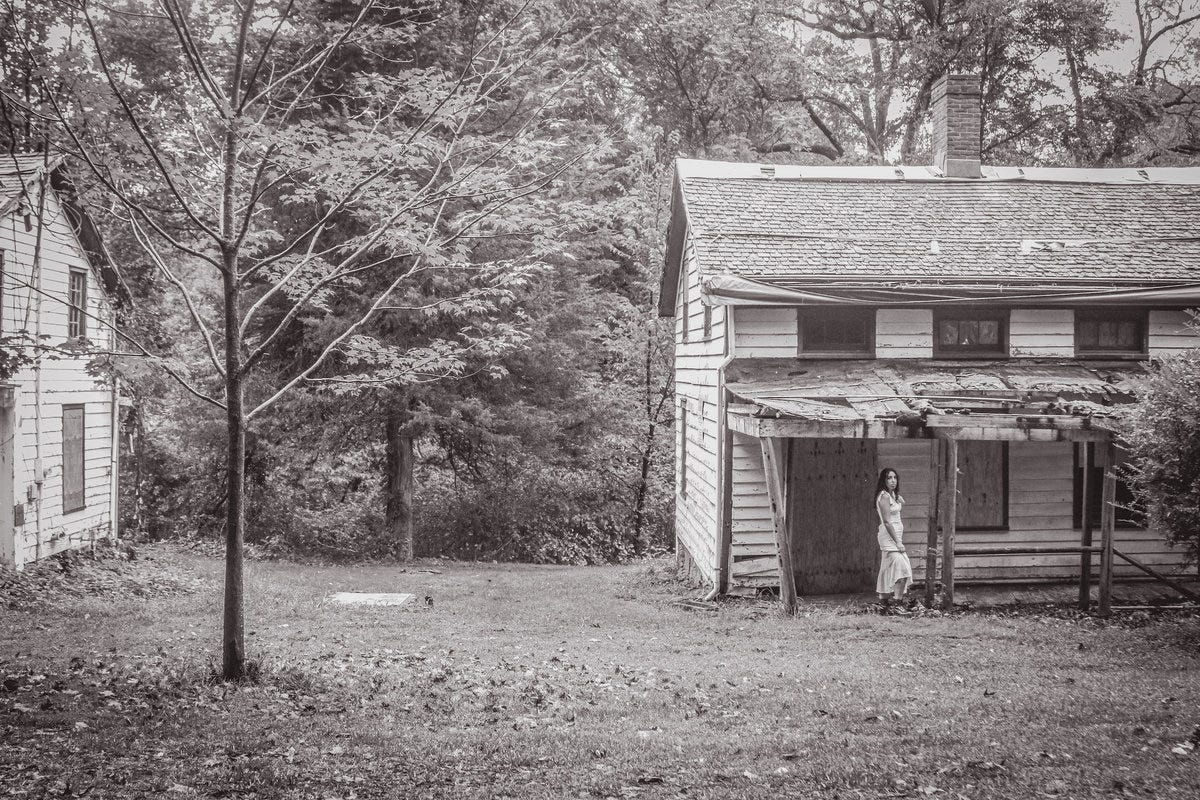
By Chilltown Blues
Last year, Stefanie Carapezza released her debut EP, “Stagefright,” and upon hearing it this year (available on all major streaming platforms), it was too good to not feel like it came out yesterday, so here we are.
Carapezza’s EP opens with “Scorched Earth,” a song that immediately shows the jazz singer’s inflection the singer-songwriter can vocalize in. Carapezza’s voice then rolls on throughout the EP in ways a bit more varied — with rock-, pop- and other tinges bolstered by strong songwriting.
It’s another great example of indie music in the singer-songwriter vein that’s stronger than what carries that label and gets the most streams.
Carapezza, a JC resident, answered some questions about “Stagefright” as she prepared to put together a concert for these challenging times.
“It’s really challenging times,” Carapezza agreed, “and I think more than ever art has become so important and maybe more polarizing because of these events. I want to highlight the Jersey City art community in general is very vocal and active to recent events regarding ICE presence in JC and Hoboken. I am putting together a show with some of my artist friends to help fund-raise for different organizations doing the work of promoting equity and inclusion for immigrants.”
It may be a five-track EP, but “Stagefright” has big arcs that it deftly explores — with “Scorched Earth” being about what it took the song’s narrator to realize her worth. A witch burned at the stake acts as a metaphor for self-actualization after destruction — for becoming a bat out of hell, despite having chronic stage fright.
“The EP collectively showcases my insecurities as an artist and musician because I did start my music journey later in life,” Carapezza said. “I started meeting a lot of incredible musicians and artists who have been creating and sharing their work for decades, and here I was a couple years into my artist journey, writing an EP. The dichotomy that I am posing is, would it have been better to start songwriting when I was less experienced and had less to say, or is it better that I have been put through the wringer and now I have a much clearer perspective on who I am and who I want to be? That was spurred from a conversation I had with my producer, Matt Maroulakos, who was instrumental in turning my demos into fully fleshed out songs.”
As for the concept of stage fright, that’s definitely both literal and metaphorical, Carapezza said.
“Putting my art out into the world terrifies me and I still get nervous when I perform my original music, but also being able to share my vulnerabilities and insecurities is a very powerful thing.”
In “Scorched Earth,” the narrator’s tear-through is fueled by an “insatiable liar,” a figure that’s open to interpretation, Carapezza said.
“It can be a literal person who defied your trust or it can be that voice in your head that tells you to give up. The idea with ‘Scorched Earth’ is to use that frustration, anger, or passion to fuel you towards ‘paradise after misery.’ Your grit and tenacity will pay off.”
Hauntings
“Stagefright” also deals with a particular kind of grief — the passing of a relationship.
Both “Ghost” and “Ghost To You” explore the nature of existing post-breakup with someone who alternately the narrator feels should be forgotten ... and then maybe, with “Outdoor Movie (On Tape)” as a bridge to “Ghost to You,” the narrator dealing with that someone moving on in a way that leaves the narrator with no sense of closure.
“Yes, the tempo and the melodic shifts in each track were very intentional,” Carapezza said. “I like to think of ‘Ghost of You’ as a foil to ‘Ghost.’ There is a consistent theme of grief throughout the project, and how you deal with that grief. The concept of closure is so interesting to me because we never really fully close the door on people or things that have caused us pain. But when we acknowledge what we feel and finally sit in that hurt, it gives it a lot less power. I think in a way that’s where this concept of haunting and a sort of residual energy come into play.”
The narrator in “Ghost” is in denial, Carapezza said, “playing back where things went wrong and trying to condemn this ghost to purgatory.
“‘Ghost to You’ I wrote to represent the ghost’s perspective,” Carapezza said. “I am imagining the ghost feels remorse and their penance is to watch the narrator move forward in their life. The ghost is stuck haunting but because the narrator doesn’t give them energy anymore; they can’t see or hear the ghost’s pleas. If you bring it back to the music itself, ‘Ghost’ is very much an energetic uptempo song because the narrator is starting to realize they can move on from this. ‘Ghost to You’ musically does not resolve. It hangs on a passing chord, and Matt and I layered my vocals which I sang in a more classical style to give it a ghostly echo effect behind — Nicole Scorsone’s incredible and lush strings which never actually crescendo which is what your ear expects. Instead it just fades out without any pay-off.
On “Outdoor Movie”
Carapezza says using this song as a bridge was intentional because this song is about memorializing loss through a film.
Her favorite lyric from it is:
“but what if it’s on the silver screen; black and white moments in perpetuity”
“Sometimes we can’t acknowledge or understand what we really feel,” Carapezza said. “I think art is such a wonderful vehicle for helping people process their emotions. There’s no sense of closure in ‘Outdoor Movie’; it’s all about taking a moment to feel the hurt and sadness. The song was also recorded on tape to add an additional rawness and unfinished quality that echoes this lack of closure.”
“Underground”
Final track “Underground” seems, at first, to be more about a person who’s underground in “the late …” sense, but then it seems like final lines indicate it’s more about putting all of the above, which seems like it went by so quickly and yet lasted forever, to rest. That’s an evocative description of the sense of time that circles back a bit to “Scorched Earth” and the sort of upside-down sense that comes with feeling like time has been wasted.
“Interestingly enough, when I wrote ‘Underground’ I wanted it to sound like a lullaby and a funeral dirge,” Carapezza said. “There’s this sort of tolling tone from the guitar — my guitar teacher Bilgehan Tuncera and I wrote this song together in one of my first guitar lessons — but also a soothing underlying melody. I wanted to bring like a chiaroscuro to this song and mix the sense of dread that comes from dying with a sense of hope in finding peace or ‘paradise.’
“I think it comes back to my perspective that I feel like I’m behind or too late. In ‘Underground,’ the bridge of the song is bringing forth that sense of hope that’s ultimately the thesis to ‘Stagefright,’’’Carapezza said.
That bridge:
“The memories flood your brain like a torrential rain and the colors are mixing, faces starting blurring now. And they don’t know that you still hear voices of those held dear. Take solace in knowing you’ll always be around, can’t lose what’s been found.”
“Putting things to rest and grieving them does not mean they’re gone,” Carapezza said. “I think that’s why I wrote ‘inflection point’ when I describe the project on BandCamp. Grief is not one feeling but rather a spectrum of emotions that can lead to new perspectives and change.
“For me, I need to stop vilifying myself when I am experiencing these growing pains, and instead give myself grace that I still get to grow and change,” Carapezza said. “Also getting to create music and to share it with people is the most wonderful gift. and it brings me immense joy.”
“Poor lonely player, but is that you or me?” - Stefanie Carapezza on “Underground”
“The last tag in the song ‘Underground’ is ‘Poor lonely player, but is that you or me?’ Carapezza said. “Ultimately we all feel like we don’t have enough time to do what we want to do. That line is a nod to the ‘Tomorrow’ soliloquy from Macbeth – “life’s but a walking shadow, a poor player who struts and frets his hour upon the stage and then is heard no more.’
“There’s a cyclical nature to grief and a non-linear timeline where we can always think about what could have been and get stuck in that,” Carapezza said “But we all have a choice to bury whatever doesn’t serve us anymore, and get back on stage to keep sharing our stories.”
You can follow and find Carapezza’s music through linktr.ee/stefcarapezza and follow her at @steffcarapezz to find about the upcoming fundraising show she’s putting together.
Also note that the entire “Stagefright” EP is $3 on Bandcamp, and that’s a steal.
Shout-out
Carapezza wanted to shout out the team behind “Stagefright":
Grant Zubritsky (electric guitar/bass/piano/synth), Dana LaMarca (drums), Adam Christgau (drums), Brian Wiseman (vocal production and “Jersey City-based voice coach!”), Mike Piacentini (mastering), with artwork by Eli Wagner.
“‘Stagefright’ was recorded at Smacktone Studios in Woodland Park, NJ, Matt’s personal studio in LA, and Elevator Studios in JC.”

